:::: MENU ::::
Showing posts with label biogas news. Show all posts
 Camartec appeals for massive biogas production

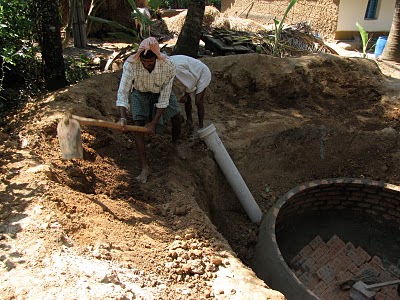
Sisal Biogas Plant at Hale Tanzania

The Centre for Agriculture Mechanisation and Rural Technology (Camartec) has appealed for more government budget allocation to boost biogas production that could help many power users cope with the current energy crisis.
Biogas which is pollution-free and clean gas is seen as an option for rural and peri-urban low and medium income earners as it can easily produce energy for their daily domestic needs, such as cooking, heating and lighting.
Camartec is implementing biogas project across the country, and so far a total of 12,000 biogas plants are to be constructed under the first phase of the project set to cost euro 16 million to completion 2013.
“But budget constraints remained a challenge to spread the biogas technology across Tanzania especially for rural-based communities,” Camartec director general Evarist Ng’wandu said.
Speaking to media practitioners here recently, engineer Ng’wandu stressed the need to allocate more financial resources in the Ministry of Industry, Trade and Marketing.
“This will help to boost the biogas sector in Tanzania which is affordable and simple in rural and peri-urban households,” he said.
The official noted that despite its economic and environmental significance, the 29-year-old centre is constrained with a number of challenges, one being shortage of funds.
Camartec is responsible for carrying-out different researches as well as promoting improved household stoves, community stoves, biogas and solar energy facilities, he noted.
“But all these couldn’t be reached if there are no funds to accomplish all these responsibilities,” he said.
“Our centre has increased services to 11 regions and managed to train technicians to install over 500 biogas plants in those areas,” Ng’wandu said
He added that agriculture alone will not succeed without industrial development; hence the need to allocate more funds in the sector remained crucial.
He however commended government efforts in developing biogas technology, whereby in five-years between 2007 and 2013, the centre plans to install about 12,000 biogas plants across the country.
Started in 1982, the centre was meant to produce and disseminate agricultural implements such as harrow planters, nutshells, oil press machines, wheelbarrows, pulling and oxen carts, water harvesting tanks and brick making tools.
Among other things, Camartec also pioneered to develop biogas technology, the innovation intended to be among the responses to skyrocketing oil prices in the world market in 1970s.
A plant used to produce biogas, also known as a biodigester, is an anaerobic digester that treats farm wastes or energy crops. This has been mostly the case in the developed countries where in recent years the technology has assumed new importance because of advanced methods of waste treatment.
In most developing countries, however, domestic biogas plants convert livestock manure into gas. The technology has been feasible for smallholders with livestock producing at least 50 kgs of manure per day.
Recently, Camartec launched a large-scale production of biodigesters that could help many families cope with the crisis.
The project, as a component of the African Biogas Partnership Programme (ABPP), known as Tanzania Domestic Biogas Programme (TDBP), is funded by The Netherlands, through its directorate of international cooperation.
Programme coordinator Lehada Cyprian Shilla, once expressed optimism over its potential to alleviate current energy woes as it would provide cleaner and safer energy solutions at a household level.
When it was officially inaugurated by Vice President Mohamed Gharib Bilal, a total of 1,439 units had been constructed under the programme in various regions  giving Tanzania a lead ahead of other nations where the initiative is being undertaken in Africa.
“Besides, providing an alternative source of energy to households currently faced with rising kerosene prices and worsening electricity crisis, the programme is expected to stimulate the private sector’s participation in the development of biogas technology and sale of a gas “that is affordable and simple in rural and peri-urban households,” he said.
By Lusekelo Philemon, The Guardian
 
Source: http://in2eastafrica.net/tanzania-camartec-appeals-for-massive-biogas-production/

 Biogas to be produced from poisonous algae?


Swedish researchers are now gathering poisonous alga with the help of oil sump pumps. The aim is to use this system to save sensitive shores and at the same time use the alga soup in the production of biogas. The current project is led by Fredrik Gröndahl, associate professor at KTH in Stockholm.
The Baltic Sea is one of the most polluted in the world. In the last 50 years it has suffered from over-fertilisation and during this process the poisonous algal blooms have become more common.
The new method is currently tested on alga in the St Anna archipelago outside Norrköping.  

Source: blog.paksc.org

Domestic Biogas in Widhya Asih II Orphanages Blimbingsari


The name of the PA board. Widhya Asih II
With the rise in fuel prices many times, then the prospects for development of biogas and organic fertilizer more promising, because the need for increased fuel and fertilizer prices inorganic increasingly unaffordable for the community. Similarly, perceived by the PA. Widhya Asih II located in the village Blimbingsari – Jembrana – Bali. Heard about the new program from KSU. Small Business Partner (MUK) who utilize livestock waste to biogas, a nanny from the PA. Widhya Asih II went to the cans to get the information. Armed with the existing capital in the form of pigs, PA. Widhya Asih BLUE II to implement programs with full support from the cans and CV. Independent Business Partner (MUM) program aims to utilize biogas and organic fertilizer from livestock, as well as increasing income and welfare of the PA. Widhya Asih II.Mercy Orphanage Widhya II Blimbingsari currently about 70 foster children who are mostly still in elementary school. Mercy Orphanage Widhya II using biogas for cooking and drinking water to meet the needs of children – children and staff were there.They use the biogas as it can utilize animal manure as a producer of methane gas for combustion, can also participate in helping to reduce the impact of global warming from the release of harmful gases (methane) from animal manure uncontrolled into the air. Use of Biogas is also to reduce expenses kitchen.
Gas Reactor Development
Biogas house was built on cooperation between the KSU. Small Business Partners with a CV. Independent Business Partners and the support of BLUE-HIVOS. Its construction involves personnel who are trained and certified hand -HIVOS BLUE Jakarta to ensure / maintain the quality of construction, so that could be used for a long time.
Biogas for the Kitchen
In addition to environmentally friendly Domestic Biogas also produces organic fertilizer that can be used for organic-based agriculture. Utilization of biogas residue as organic fertilizer house proved able to improve the structure of agricultural land and make the soil rich in nutrients. Fertilizer is also a source of nutrients for plants. Diversification of handling waste biogas to be used as quality fertilizer needs to be done.
Biogas dregs for Organic Fertilizer
Pakistan Council for Renewable Energy Technologies (PCRET) to install 368 biogas plants in rural areas
Pakistan Council for Renewable Energy Technologies (PCRET) logo

Islamabad—Pakistan Council of Renewable Energy Technologies (PCRET) will install 368 Biogas plants in different rural areas by the June 2012 under the project “Development and Promotion of Biogas Technology for meeting domestic fuel needs of rural areas and production of Bio-fertilizer”. This project was launched in 2008 through which 2500 family size Biogas plants are to be installed in the country ,out of these 2132 plants have been installed and the remaining will be installed by end of financial year 2011-12.

Biogas plant is a device used for converting fermentable organic matter, particularly cattle dung, into a combustible gas (Biogas) and fully matured and enriched organic fertilizer. A typical biogas plant consists of a digester where the anaerobic fermentation takes place, a gasholder for collecting the biogas, the input-output units for feeding the influent and storing the effluent respectively, and a gas distribution system.

Giving further details, Deputy Director PCRET, Sarfraz Khattak said as per livestock census 2000, there are 46.69 million of animals (Buffaloes, Cows, Bullocks) in Pakistan. In the year 2002-03, the domestic live stock population was estimated at 23.3 million cattle, 24.8 million buffalo, 24.6 million sheep and 52.8 million goats.

He said on the average, the daily dung dropping of a medium size animal is estimated at 10 Kg/per day. This would yield a total of 466.9 million Kg dung per day. Assuming 50% collectability, the availability of fresh dung comes to be 233.45 million Kg/ per day. Thus, 11.67 Million M3 biogas per day can be produced through bio-methanation, he maintained.

Since 0.4 M3 gas could suffice the cooking needs of a person per day, therefore 11.67 million M3 of biogas could meet the cooking needs of 29.2 million peoples. The total population of Pakistan is about 170 million, out of which 70% reside in the rural areas.

“We can meet about 30% cooking requirements of the rural masses from this source of energy (biogas) alone. Besides, producing 33.52 million Kg of bio-fertilizer per day or 18.6 million tons of bio-fertilizer per year, which is an essential requirement for sustaining the fertility of agricultural lands”, Sarfraz Khattak maintained. Giving further details, Deputy Director PCRET said average family in Pakistan consists upon 5-7 members. As per survey, the consumption of various kind of conventional fuel for cooking purpose includes Wood 27.93 Kg/ day, Animal dung 61.66 Kg/day , Charcoal 8.1 Kg/day,Kerosene oil 3.1 Lt/day, L.P.G 1.5 Kg/day ,electricity 25 KWh/day. Deputy Director PCRET said a family size Biogas plant (5 M3) save annually 10056Kg wood or 22200 Kg animal dung or 2940 Kg charcoal or 1104 lit kerosene oil or 540 kg L.P.G or 9000 Kwh electricity. Sarfraz Khattak said completion of this project will help protection of forests,protection of environment and bio- diversity,provision of soot-free fuel to meet domestic energy needs,provision of neat and clean atmosphere, protection from eye- cataracts and respiratory diseases and also provision of Bio- fertilizer, which is direly needed for the improvement and sustenance of fertility of agr lands.

Source: http://blog.paksc.org/2011/08/01/pcret-install-368-biogas-plants/

TSB set to install biogas plants in 14 sisal estates


The Tanzania Sisal Board (TSB) has taken bold and foresighted decision by opting for biogas for power generation to its sisal estates. OUR CORRESPONDENT reports that the ambitious project will initially cover 14 sisal estates specifically picked because of their performance.
The move, he writes, will enable TSB to stop using power from the national power utility firm - TANESCO - which at present pockets 40 per cent of the total running cost in the sisal industry. The 14 biogas plants are expected to generate about 500 MW, sufficient to meet the estates’ needs while the surplus will be sold to the national grid. Read on…
Electricity stakeholders in the country - manufacturing industries, institutions and individual households - are evidently not happy with the country’s sole energy power provider, the Tanzania Electricity Supply Company (TANESCO).
They are particularly frustrated by the intermittent power cuts which have persisted for too long. As if this was not a serious shortcoming, the stakeholders have again to grapple with ever escalating exorbitant power tariffs.
Experts believe that the suffering wrought on the populace is a result of the power utility firm’s monopoly in the provision of electricity in the country.
“TANESCO should not be allowed to run its business side by side with the government. It should have competitors. In the process, prices of electricity will be pushed down”, says a Dar es Salaam based industrial engineer.
He believes that competition which would be brought about by investment in the sector could cover a larger population of power users; hence more revenue to the government.
Having noticed that the country’s energy cost is too high, the Tanzania Sisal Board (TSB) has envisaged to put up a total of 14 biogas plants for production of biogas for electricity generation.
The parastatal also aims at running away from the present exorbitant cost which it pays to TANESCO, amounting to 40 per cent of the total direct running cost in the sisal industry.
“The anticipated move is intended to enable TSB to participate fully in supplementing the government’s efforts to provide power to the country,” says Hamisi Mapinda, TSB’s Acting Director General.
Mapinda said the plants would be erected at sisal estates earmarked for this purpose.
“Fourteen estates where the plants will be installed were picked on merit based on performance,” said the acting DG in an exclusive interview with THE GUARDIAN recently.
The plants will be installed at Magoma, Gomba, Rudewa, Magunga, Fatemi, Kigombe and Kwaruguru estates.
Other estates are Mwera,Toronto, Mazinde, Mkumbara, Lugongo, Mwelya and Ubena.
The DG said the proposed plants are expected to generate about 500 MW, which according to the board, is sufficient to meet the estates needs while the surplus will be sold to the national grid.
“Apart from the envisaged installation of the plants, we also intend to erect 3,000 digesters to 3,000 households for generation of biogas for both lighting and cooking,” he says.
Mapinda said his institution has already prepared a 10 year crop development plan - an implementation of the Election Manifesto 2010 - for the purpose of promoting production and productivity in the sisal industry and ultimately overcoming the effects of poverty, hence ensuring household food security.
According the proposed plan, which has already been availed to stakeholders for their views as implementers of the strategy, a large chunk of land - 146,061.69 hectares of sisal - has been earmarked for development.
“This includes 131,069.79 hectares of mature sisal land and 14,981.90 hectares of immature sisal land,” says Mapinda.
The area under the ownership of small scale sisal farmers will be increased from the present 6748 hectares in 2010 to 22,200 hectares in 2020,” he says.
In order to ensure the selected estates have enough sisal for decortications, the industry will put emphasis on replanting new sisal, cleaning of existing sisal fields as well as encouraging the use of soil and water conservation techniques, according to Mapinda.
To succeed in such endeavors, TBS’s plan lists objectives such as mobilization of financial, human and technological resources for increased production.
Others, says the sisal boss, are increases in the country’s export market share from the current 7 per cent to 39 per cent within the plan period.
“Participation of small holders and out-grower farmers in the industry, shall be increased from the current 418 households in 2010 to 4,400 households within the plan period,” according to him, adding that the aim is to widen their participation and improve the farmers income and alleviate poverty.
Presently, the sisal industry has one biogas plant – installed at Hale in 2007 as a pilot project. Built at a cost of 1.5 million US dollars, it was financial by Common Fund for Commodities (CFC), United National Development Organization (UNIDO) and the government of Tanzania.
Commenting on the proposed installation of the plants, a retired government school head, Aloyce Gondwe, said TSB had taken a step in the right direction by investing in other sources of power.
He added: “The government should use what is available in the country. There is solar energy, windmill etc. which are cheaper than hydroelectric power.”
Sole dependence on hydro power is not appropriate, he says, adding: “The use of this energy is too expensive because for electricity to reach a village or school, you need poles, wires and transformers, components which are definitely out of the reach of the intended consumers”.

Manure to power Ind. dairy farms' delivery trucks

FILE In this Sept. 17, 2003 photo, Dr. Guy Roberts of the Intervale demonstrates a model Anaerobic digester in Burlington, Vt., One of the nation's largest dairy farm cooperatives plans to use manure from its thousands of cows to power a new fleet of milk-delivery trucks. Fair Oaks Farms in northwestern Indiana plans to have 42 new delivery trucks running on renewable natural gas by early next year. The fleet will be able to haul more than 300,000 gallons of milk to processing centers in Indiana, Kentucky and Tennessee daily. The fuel is created by anaerobic digester technology, which harnesses microorganisms to turn manure into biogas. The Fair Oaks Farms project will turn the biogas into nearly pure methane that can fuel the natural gas-powered trucks. Photo: Toby Talbot / AP


INDIANAPOLIS (AP) — One of the nation's largest dairy cooperatives plans to tap a plentiful energy source — manure from the farms' cows — to power its fleet of milk-delivery trucks.
By early next year, Fair Oaks Farms in northwestern Indiana plans to have 42 new delivery trucks running on compressed natural gas created by harnessing microorganisms to turn the cows' manure into biogas.
Anaerobic digester technology uses bacteria to break down manure in the oxygen-free environment of closed buildings or covered lagoons, producing methane, carbon dioxide and trace gases. Fair Oaks Farms, a marketing cooperative of 10 farms housing about 35,000 cows owned by several families, already operates six digesters which produce gas to run generators that provide electricity to the farms.
The new project supported by federal and state grants will take the technology further, upgrading one of those digesters to turn the biogas into nearly pure methane and compressing it to fuel new natural gas-powered trucks that will replace diesel-power models.
The new fleet will be capable of hauling more than 300,000 gallons of milk each day to processing centers in Indiana, Kentucky and Tennessee.
"The cows making the milk will be helping delivering it too," said Mark Stoermann, project manager for Fair Oaks Farms.
To help extend the trucks' range between fill-ups, they will be outfitted with extra natural gas tanks purchased with a $2 million U.S. Department of Energy grant.
A separate $750,000 state grant will support construction of two fueling stations along Interstate 65 — one at Fair Oaks, which is about 70 miles south of Chicago, and one nearly 220 miles away in Sellersburg, near the state's southeast border with Kentucky. The Fair Oaks station will supply renewable gas derived from manure, while the Sellersburg station will deliver regular natural gas.
Stoermann said Fair Oaks expects to feed enough surplus renewable natural gas from its operations into a pipeline near the farms to more than compensate for the gas its trucks get in Sellersburg.
A handful of California dairy farms produce methane from manure and compress it for use in powering tractors, trucks and other machinery. But that equipment is used primarily on those farms, said Jerry Bingold, director of renewable energy at the Innovation Center for U.S. Dairy, a dairy industry group founded in 2008.
Fair Oaks' broader plan appears to be a first for an American dairy, he said.
"They're actually moving from localized on-dairy use to really long-haul application, which is a significant move for the industry," Bingold said.
About 150 U.S. dairies use anaerobic digesters to process manure and produce power. Bingold said the industry hopes that by 2020, about 1,300 dairies will be using digesters to either generate electricity or make compressed methane.
While U.S. dairies are beginning to realize the potential of manure-to-methane technology, Bingold said agricultural lending institutions still are being sold on the technology's potential, just as other renewable energy sources received slow acceptance.
"We're developing a business model around digester operations that's going to take lessons learned from the wind and the solar industry to really build this industry," Bingold said.
About 2,600 dairy farms and 5,500 hog farms are good candidates for the technology, according to the federal AgSTAR program — a partnership among the U.S. energy and agriculture departments and the U.S. Environmental Protection Agency that's promoting manure-to-methane technologies.
Those more than 8,000 farms have the potential to produce 13 million total megawatt hours of electricity each year, or enough to power about 870,000 households. Or, the same farms could instead produce some 150 billion cubic feet of renewable methane that would be enough to heat 3 million households, AgSTAR national program manager Chris Voell said.
The nation harnesses less than 2 percent of its potential for renewable methane, Voell said. But he said farms, restaurant chains and big food processors are slowly recognizing that the organic waste they send to landfills or otherwise discard can be turned into power to help their bottom lines.
"The energy policies in this country are in some cases still running to catch up with all of the opportunities out there," he said.

Russia to Develop Biogas Projects to Help Power Rural Regions


Russia plans to develop biogas to provide fuel and power in rural regions, supplementing fossil fuels in the world’s biggest exporter of oil and gas.
The country may produce 66 billion cubic meters of biogas a year from agricultural waste, the Energy Ministry said today in an e-mailed statement. That is equivalent to 33 billion liters (8.7 billion gallons) of gasoline or diesel a year or could generate 110 billion kilowatt-hours of electricity and 1 billion gigajoules of heat, it said.
The Energy and Agriculture Ministries plan to seek subsidies and legislative support from the government to expand use of the renewable resource and make it profitable, Deputy Agriculture Minister Shamil Vakhitov said in the statement. “Without these measures, bioenergy has no future in Russia.”
OAO Inter RAO UES and China’s National Bio Energy Co. agreed June 16 to create the Green Energy Corp. joint venture by the end of this year to overhaul inefficient power plants that run on coal and fuel oil to include the use of biomass, according to the statement.
To contact the reporter on this story: Marina Sysoyeva in Moscow msysoyeva@bloomberg.net
To contact the editor responsible for this story: Claudia Carpenter at ccarpenter2@bloomberg.net

Source: http://www.bloomberg.com/news/2011-06-18/russia-to-develop-biogas-projects-to-help-power-rural-regions.html

Germany’s Biogas Bhopal? Deadly E. Coli “House-Made” Says Expert

The German Die Welt online here reports that veterinary and medical experts are now saying that biogas plants may be the source of the lethal E. coli bacteria now running rampant through Germany. Although the disaster is nowhere the scale we saw in Bhopal, India, so far we have seen 18 dead and over 500 hospitalized. And needless to say, millions of Europeans are spooked.
Manure and biogas plant-waste on food would be unthinkable inside a food factory, but not out in the field? Photo source and information: http://sustainableagrisystems.com/landapplication.htm

Die Welt also reports that Hellwig has long been critical of biogas plants. Yet biogas industry proponents claim there is no connection between the current E. coli outbreak and biogas plant operations.
Hellwig is not alone in this belief. Die Welt also writes that laboratory director Bernd Schottdorf, founder of the 1500-employee private medical laboratory Schottdorf MVZ in Augsburg, the biggest in Europe, also thinks the connection is possible. “Spores survive the biogas plants’ prescribed hygienization of 70°C without a problem“, he says. “We don’t know if the hygienization is properly carried out at all biogas plants.” When waste product from biogas plants is spread on fields, they can contaminate the vegetables.
North Germany’s unusual dry weather and drought conditions, where it did not rain for weeks during the springtime, may have played a role in the spread of the deadly bacteria. Spores can stay on plants for a long time, as they don’t get washed off by rain. The biogas plant substrate, which is a by-product and is used as a fertilizer, probably didn’t get washed off the crops by any rain. Currently there are 6800 biogas plants in Germany and their inspection is disorganised.
North German drought and dirty irrigation and “unwashed” crops
Manure slurry spreaders also used for irrigation.
Die Welt also writes that experts believe the unusually dry spring weather also may have led farmers to irrigate their crops using their liquid-manure spreaders. Farmers sometimes irrigate crops during dry spells using liquid manure spreaders, as this German manufacturer suggests here (scroll down to Liquid manure Distribution and irrigation systems). 
The problem is that these liquid manure tanks are of course dirty and so contaminate the water, which in turn contaminates the crops. And then if it doesn’t rain for days or weeks, the crops stay contaminated through the time they are harvested.
Some points are clear: 1) The source of the E. coli is Northern Germany, which is home to many biogas plants and where agricultural manure fertilizer is widely used. The weather in the run-up to the start of the epidemic was very dry. Indeed, more detective work is needed to trace back the cause.
The online  FOCUS magazine here also brings up the biogas plant issue, hat-tip DirkH.
Biogas plants are also suspected of causing DEADLY BOTULISM in North German Agriculture, read here. Looks like all the well-intentioned green growing is leading to a trail of death and illness instead of natural health and cleanliness.

Original post from : http://notrickszone.com/2011/06/05/germanys-biogas-bhopal-deadly-e-coli-house-made-says-expert/

 Community bio-gas plant to come up in Mau


VARANASI: For the promotion of green or non-conventional energy sources, the Jatropha Mission Cell, Department of Planning, is taking initiative to expand its activities in eastern UP.

"We have identified a place in Mau for the creation of community bio-gas plant based on solid and liquid wastes," informed PS Ojha, the state coordinator of the cell. He is hopeful of beginning a bio-gas unit in Mau within a month. "We have also made a proposal to the Banaras Hindu University (BHU) for the establishment of a demonstration plant of bio-diesel from jatropha on its Rajiv Gandhi South Campus, Barkachha," he said.

According to Ojha, Government of India has modified the 'Total Sanitation Campaign' (TSC) guidelines to incorporate the management of solid and liquid wastes. "We have started a 1000-cubic metre bio-gas plant at a village in Sant Kabir Nagar district for electricity generation for villagers," he said and added "the projects of 100-cubic metre bio-gas plants have sanction for other districts including Mathura, Jyotiba Phole Nagar and Mau. The bio-gas produced by from wastes is a clean-fuel."

Earlier, the cell had established a bio-gas unit at Mishrawallia village in Ballia district in 2008 for piped bio-gas supply to rural households. According to him, all types of wastes, including solid and liquid, are utilised in bio-gas production.

"Beside community bio-gas plants, we also promote family size (10-cubic metre) units for the need of a family," he said. Such bio-gas units have been incorporated in the Ramabai Ambedkar Gramin Urja Pariyojna. Referring to a report of the ministry of agriculture, he said though crop-increasing value of animal faeces had been recognised, more than 50% of the cattle dung was either burnt or remained unmanaged.

"Traditionally the cattle dung, along with house sweeping, is collected in the open backyard in rural areas. The most common way of disposal of cow dung is to convert it into dung cakes that are burnt as fuel in rural households," he said. Burning the cow dung not only adds to carbon emission, which is a green house gas leading to ozone layer depletion, but also is an inefficient way of using the dung which is rich in calorific value and can generate efficient form of fuel if properly decomposed in a bio-digester.

According to him, anaerobic decomposition of organic waste leads to methane production, which is a good fuel. As per calorific value table one kg of methane gas is more or less equal in energy content to one kg of petrol, LPG, kerosene or diesel. The 'gobar' gas research station in Kanpur Gaushala Samiti has established that one cow gives enough cow-dung in a year to produce methane gas equivalent to 255 litres of petrol in energy terms. The cow dung and other organic wastes in rural areas can be used to produce methane gas. It is estimated that with existing cattle population, India can produce enough methane gas to entirely replace LPG and kerosene in cooking, and substitute petrol in transportation. "Methane gas can also generate enough electricity to meet all requirements, at least in rural areas. The by-product can serve as excellent organic manure, substituting chemical fertilisers," he said. "The advantages of the use of waste in bio-gas generation include sanitation, energy security, pollution control, and employment generation," he added.

Need for biogas plants highlighted


CANACONA: A ten-day training programme for masons from different talukas of Goa on construction of biogas plants, was organised by Directorate of Agriculture in association with the zonal agriculture office, Canacona, at Marlim-Tirval in Poinguinnim recently.
Master mason from Belgaum, Mr Kalappa Navregar was the resource person for the programme, informed Canacona ZAO, Mr Rajesh Desai.
Deputy director of agriculture, Mr Prajapati Tufani, who was also present during some of the sessions, spoke on the importance and significance of biogas and said that the compost that is derived from a biogas plant is devoid of weeds. He further said that, in order to sensitise the people and the farmers on the importance of biogas, a meeting was held at this very place.
He informed that biogas plants were constructed in four homes free of cost and that the construction of fifth plant is in progress.
The residents who got biogas plants constructed are Mr Shashikant Gaonkar, Mr Ram M Gaonkar and Mr Anand Gaonkar from Marlim and Mr Laxman Gaonkar from Tirval, while the fifth construction which is in progress is of Mr Mhablu Gaonkar of Tirval.
During the programme, the masons were also guided by Dr H Eshwarappa, professor and head of department of agricultural engineering, Bangalore, Dr K V Pathy, professor of agricultural engineering and Dr Kumar Gowda, project manager, biogas training centre.
During the programme, assistant zonal officers of all the talukas were present, informed ZAO Canacona, Mr Desai, who welcomed the function while assistant zonal officer, Ms Gauri Prabhudesai proposed the vote of thanks.

Banana peels to biogas - Peninsula News Review 


The Vantreight family farm is moving ahead in an attempt to create its own energy source while diverting compostable material from the waste stream.
Ryan Vantreight made a presentation to a meeting of all three Peninsula municipalities to explain the process.
“Vantreight Integrated Resource Management has been a process we’ve been looking at as well as a technology we’ve been researching that started about three years ago. We do, right now, aerobic composting, so it’s outdoor with forced air going through it,” said Vantreight.
“The first stage of this project is feed-stock. Getting the feed-stock. Household organics right now are going to be part of the landfill unless someone has a green thumb and does composting in their backyard,” he said.
The Vantreights propose to use bio-digesters for the anaerobic digestion of organic matter to create heat and energy for the farm and community. The contained composting creates heat and natural gas which would be used on the farm, while methane is collected, reducing green house gas emissions.
Their plan is to collect compostable material from Peninsula businesses and households biweekly in the winter and weekly during the summer months. The total cost per household is estimated at $95.52 per year. Vantreight said it would also reduce the amount of garbage being taken to the landfill by 35 to 40 per cent.
Up to 20 per cent of the compost created will be available to local farms for a fee, the other 80 per cent would be used on Vantreight Farm. The natural gas created by the process would also be made available for local hospitals and other public facilities that use natural gas.
“We have been approved in writing by the ALC (Agricultural Land Comission) to process up to 45,000 tonnes a year of organic matter on the farm as a farm use,” Vantreight said.
“We will not be using sewage sludge, municipal waste from the sewage treatment plant (for input) and our electricity and transport fuels (output) will be later. What we will be using the biogas for is heating greenhouses to be able to grow more food,” he said.
“We already have letters of interest from commercial and industrial facilities that want to be able to utilize this process for their organic waste stream. What we’re looking to fill in 10 to 15 per cent is Saanich Peninsula — Saanich basically — first-come-first-served. We have the capacity and as soon as we have those agreements in place we know how much we can build and we can then engineer that facility … December 31, 2012 is when we want to be able to have our operation up and running.”
Sidney councillor Mervyn Lougher-Goodey asked Vantreight what happens if residents who already compost do not want to participate. “From local municipalities you need 15,000 tonnes … if people don’t want to pay for that service, do they have to? Right now I pay for garbage, I do not want to have to pay for this because I have a composter in my backyard and that’s where it all goes and I’m sure there’s all sorts of folks like that living here,” he said.
“This is, I think, where the conversation begins, how that would be structured,” Vantreight answered.
“In North Saanich there are lots of people that have very large properties that actually already do their own organic processing and certainly there’s lots of farms … so it’s a bit of a trickier issue when you don’t have concentrated populations,” said North Saanich councillor Ruby Commandeur. “It might be a better focal point in Dean Park where we have a concentration of housing or in Sidney or in some parts of Central Saanich, but it might be difficult to do that as an entire municipality to say, ‘everybody has to be on board and pay that $95.’”
“At one point or another it won’t be a choice,” said Vantreight. “At one point or another organics will need to go somewhere. What we’re proposing is somewhere that would be able to utilize on farm to reduce green house gas emissions … How it’s structured within the municipalities may be challenging but it’s definitely something that’s coming.”
“It’s to a point where we either sink or swim. We need to be able to move forward with this and what we need to do is be able to have those long-term agreements. This is the start of the conversation and we will be going to the other municipalities to be able to make that organic tonnage. It wasn’t solely focus on Central Saanich North Saanich it will go first-come-first-served,” said Vantreight.
“You may find it more efficient to start at the CRD (Capital Regional District) level,” said Sidney Mayor Larry Cross. “It feels a little dodgy to me, to ask us as a community, to sign a supply agreement with you by September of this year, given what’s happening in the larger picture of the CRD … also our own agreements with our service providers in terms of collection.”
Vantreight said the tonnage and timeline are attainable goals if there is both public and political will to move forward. “The main goal is to get in front of the CRD organics ban — which is coming,” he said. The ban that was scheduled for  May 1, 2012 has now been postponed to 2013.

View the original article here
Omnitek Engineering Ramps Up Diesel to Biogas Engine Conversions in the Philippines


Omnitek Engineering says it expects demand in the Philippines for its diesel engine conversion technology that enables utilization of biogas fuel to gain momentum, particularly on hog farms in remote areas with an abundance of biogas sources and sometimes limited access to electricity.
Large hog farming operations in the Philippines are participating in Methane Recovery and Electricity Generation projects, which are being governed by the Clean Development Mechanism (CDM) - an article of the Kyoto Protocol which allows industrialized countries with a greenhouse gas reduction commitment to invest in emission reducing projects in developing countries and apply them to Kyoto targets.
Covered in-ground anaerobic digesters, which convert animal waste into biogas, are being financed by foreign firms, which subsequently sell the generated carbon credits through global carbon trading markets, such as the European Climate Exchange to offset green house gas emissions.
"High diesel fuel costs, an abundance of biogas and the financial burden of replacing diesel powered generators with new natural gas systems are strong incentives for farmers to adopt our diesel engine conversion technology," said Werner Funk, president and chief executive officer of Omnitek Engineering Corporation.
He noted that four Omnitek-converted biogas power generators are already operating in the Philippines. Estimated monthly savings to farmers are considerable, and the engine conversion cost can be recovered within a four-to-eight month period - depending upon the amount of electricity produced.
Funk added that Omnitek continues to experience solid demand for its diesel engine conversions for heavy- and medium-duty truck and bus applications in other parts of the world.
"Biogas fuel is an exciting opportunity to expand and we look forward to capitalizing on other global opportunities," he said.
Sales and marketing initiatives for Omnitek's diesel engine conversion technology for biogas and farming applications in the Philippines are being supported by the company's strategic relationship formed in 2009 with Philippine-based Alternative Bio-Energy Technologies Company (ABET) to address growing local market demand for biogas engine solutions.
Funk added that diesel engines have a service life of up to 20 years, which provides an additional incentive to convert.
 Electricity generated by biogas plants in  Pune, india


Pune, May 28: Electricity maked by processing organic household waste is being used to light up the streets of Maharashtra's Pune city.s many as 225 streetlamps have been lit up by power maked by biogas or gobar gas plants.

The initiative, which was taken by the local municipal corporation, has been aimed to set up five more power plants towards the end of 2011.

According to officials, biogas or gobar gas from organic waste can be effectively used to make electricity.

"The Municipal Corporation started this biogas or gobar gas plant a year ago in the city. Every day we supply about five tonnes of organic waste to the biogas or gobar gas plant, from which we can make near about 300 cubic metres of gas, and that gas can be utilized to run the genset (generators), gas engine to make electricity. After electricity generation, electricity is utilized to light up the streetlights," said Suresh Jagta, a systems engineer.

As much as 40 percent of domestic garbage is processed every day in 12 biogas or gobar gas plants in the city.

Statistics reveal the city produces 1,200-1,400 metric tonnes of waste, out of which only 200-250 tonnes is organic waste. Out of that, 50 metric tonnes of organic waste is processed to make electricity.

According to officials, the waste is collected from different sources for further treatment.

"The plant uses green waste from households, vegetable and markets, which is called wet waste. We collect it here for treatment," said Sanjay Nandre, a project developer.

The first biogas or gobar gas plant in the city was set up in 2009.

About 2,400 tonnes of organic waste has been processed since the project was started, and 48,000 kilowatts of power has also been maked.

India has an estimated two million biogas or gobar gas plants in use since 2000.
This information came from CH4 Biogas


Wyoming County, NY -- A new mixed-waste anaerobic digester and renewable energy facility is being built at the 2,000-cow Synergy Dairy in the town of Covington.
CH4 Biogas, LLC is building the project. Four of the 16 digesters in New York state are located in Wyoming County.
CH4 Biogas said Synergy Biogas will be one of the largest on-farm digesters in the state — and the first independently owned and operated plant located on a dairy farm. Additionally, the Synergy facility will be the first biogas plant in New York state designed specifically for co-digestion of manure with food grade organic waste, said CH4 Biogas officials.
In addition to producing renewable energy, the facility will reduce greenhouse gas emissions from the farm, divert organic wastes from landfills, reduce manure odors and provide the farm with manure handling systems to more efficiently manage nutrients and protect the environment.
CH4 will build, own and operate the biogas facility that will produce renewable energy by anaerobically digesting manure from the dairy along with food grade organic waste from food processors in the region. As anaerobic digestion unlocks the energy value in manure, it reduces odors and greenhouse gas emissions and produces a nutrient-rich end product for use as fertilizer.
Synergy Biogas will provide more than 10,000 megawatt hours per year of renewable energy to the grid (electricity to power more than 1,000 homes) and reduce greenhouse gas emissions by the equivalent of 8,500 tons of carbon dioxide per year.

It is anticipated the Synergy Biogas Plant will begin operation in September.
CH4 Biogas is a renewable energy company that builds, finances, owns and operates biogas based renewable energy facilities on farms and at food processing plants.
 Massachusetts's first biogas power plant to come online


The Jordan Dairy Farm in Rutland, Mass., will soon host the state’s first operating biogas power facility.
A ribbon cutting ceremony will be held on May 31 for the manure and food waste-to-energy plant, construction of which began in October of last year. Among those attending will be Massachusetts Gov. Deval Patrick, local farmers involved and other project partners.
The plant will allow dairy farmers to better manage their cow manure by utilizing it, as well as food scraps, to produce heat and electricity (2,280 megawatt hours) for farm operations and for sale to the utility grid. It is part of the AGreen Energy LLC venture, a plan to install five anaerobic digestion plants on small dairy farms (250 to 400 animals) in the commonwealth.
The AGE projects are being designed, built and monitored by Ohio-based quasar energy group; Casella Waste Systems will operate the digesters and provide liquid source separation organics through its wholly owned company New England Organics.
The AGE venture requires about a $3 million capital investment per farm. Each anaerobic digester will employ a complete-mix process with a modular design, and the systems will be entirely computer controlled, allowing for remote monitoring and control.

Source: http://www.biomassmagazine.com/articles/5561/massachusettss-first-biogas-power-plant-to-come-online

BioGasWorld 2012

Starting in 2012, the international trade fair BiogasWorld will be taking place in future every two years at the Berlin Exhibition Grounds together with the traditional SolarEnergy and bautec technology shows. Around 70,000 visitors from around the world will be visiting the grounds on the five days of the exhibitions. Apart from the domestic German market, BiogasWorld places a special focus on the eastern European countries from Poland and the Czech Republic to the Baltic States and Russia.
Poland, in particular, is seen as a land of the future as far as biogas technologies are concerned. The country‘s government and investors have just recently given the green light to accelerate development in this area. In the short to medium term, the aim is that decentralised electricity and heat from biogas plants will take up its fair share of the basic energy provision for the population and infrastructure requirements in Poland‘s rural regions.
Whereas in Germany the sales market is already stagnating in several regions and, parallel to new investment, the highly promising area of the „repowering“ of old facilities is becoming more and more important, the Eastern European countries are regarded as virgin territory for biogas applications with considerable development prospects.

International Biogas Operators Course Sept. 2011

Course Information

This 4-day intensive training is designed to provide plant operators, decision makers and investors with profound specific operators knowledge. The focus of this training course is to combine practical experience with theoretical and scientific knowledge. IBBK Fachgruppe Biogas and the University of Hohenheim are the organisers and conductors of this in depth training course. This ensures, that participants have the full benefit of substantial and long term practical and theoretical experiences, which senior experts within the German Biogas Industry are providing.

General program topics

(Prelimineray program, programm is subject to change)
  • Introduction and definitions
  • When is a biogas plant an appropriate investment ?
  • Basic values and calculation formulas of the biogas process
  • Digester biology, input substrates, gas yields from biowaste and energy crops, basic principles of process technology
  • Optimal process start up (or major change) and shut down measures
  • System operation with wastes and energy crops, pretreatment, feeding technologies, stirring and mixing
  • Day to day maintenance, trouble shooting, process control, record keeping
  • Measures for process optimization, stabilization and enhancement
  • Environmental constraints, fertilizer spreading, ecological fertilizer
    management with biogas slurry, ecological evaluation, digestate treatment
    and storage
  • Biogas treatment, storage, upgrading and utilization
  • Safety standards in agricultural biogas plants during start up, operation, and
    shut down procedures

Conditions of participation

Registration is required in writing per post, fax or e-mail. After receiving your complete registration, we will send you the confirmation and invoice by e-mail. Registration is legally binding. Written cancellations are possible until September 06, 2011. Upon cancellation payments made up to that time will be refunded except for an administration charge of 150 €. After September 06 refunds are no longer possible. Late registrations which are canceled are billed in full. In case of cancellations we gladly accept a substitute participant. The number of participants is limited, therefore a timely registration and prepayment is required no later than September 06, 2011. After that deadline participation is only possible upon request. The Biogas Operators Course will be conducted in English.

Scotland’s largest biogas plant takes shape

Scotland is to get its largest biogas plant yet at a former landfill site at Barkip, North Ayrshire, in a £13.5m deal involving Scottish and Southern Energy.
The Danish group Xergi will deliver the entire plant to Scotland for €8 million. It will then be constructed by Luddon Construction on behalf of Scottish & Southern Energy Generation Limited. The project is being built on a William Tracey Group landfill site.
JBD Tritec provided specialist pipework, fabrication and pumps and value services for the project. Burnhouse Engineering have been assisting with engineering designs, including the fibre handling system and acid storage system. They are also supplying 800 metres of process pipework, boiler, emergency flare to burn off gas, a 25 metre tall chimney stack and hydraulic tip tank doors. In addition, the company is assisting with 2D and 3D modelling drawings to determine plant layout.
Project partner, William Tracey, has signed a 25-year contract to supply feedstock materials for the plant, providing another recycling outlet for their customers to divert wastes away from landfill. Suitable materials will include waste foods, manures and organic effluent sludge.
Zero Waste Scotland confirmed its largest investment to date in anaerobic digestion with an investment of £2.2m for the Barkip site from its Organics Capital Grants programme.
Once completed, the plant will be operated by Zebec Biogas, also a West of Scotland company, who are enzyme and biological process experts and co-developed the project.  It will create 10 permanent jobs.
The plant includes a combined heat and power (CHP) unit producing power and heat, and storage tanks for the fertiliser. It will be capable of processing around 75,000 tonnes of waste annually (enough electricity to power 4,000 homes), producing around 2.0mW of renewable electricity.
Anaerobic Digestion is a natural biological process which uses bacterial cultures within enclosed silo tanks to generate methane rich biogas from waste organic materials and energy crops such as grass silage.  The biogas is captured and used to fuel engines which will generate renewable electricity that can be fed into the National Grid. It is a very different proposition from traditional power plants, as it uses a process which is an incredibly natural method (very similar to how a cow digests its food), so the fuel is not burned but digested by natural microbes instead! Other by-products from the AD process, such as plastics and metals from food containers, will be sent for recycling and the residue that remains at the end of process will be sold on as a high quality natural fertiliser. This technology is already in wide use across mainland Europe.
Environment Cabinet Secretary, Richard Lochhead, commented: “This major investment helps place anaerobic digestion at the heart of waste policy and emphasises the importance of renewable energy. The £2.2m grant to SSE demonstrates a robust commitment by the Scottish Government to invest in the future of a zero waste Scotland. The Barkip plant will be the largest of its kind in Scotland and will divert a staggering 37,000 tonnes of food waste from landfill each year, reduce greenhouse gas emissions and recover value from resources that would otherwise be wasted.”
Xergi UK Country Manager Colin Steel adds: “This project is indeed a further leap forward and an important step in our establishment on the UK market. Everyone involved in this project should be congratulated in their efforts; we look forward to working closely with SSE in the future.”
SSE Chief Executive Ian Marchant says: “Biogas has the potential to be one of the most important new generation renewable and sustainable energy solutions available to us, capturing the energy contained in waste”.
The plant is rapidly nearing completion with the installation of the very heart of power production at the plant; the massive primary and secondary digesters.
Bobby Gavin, Organic Recycling Account Manager for the William Tracey Group is delighted that the project has taken another huge step closer to completion: “This April, the landfill tax will increase to £56 per tonne. Companies who recycle food will have an opportunity to save costs in the face of such increases, so there’s now a very real opportunity to reduce waste, produce green energy, and lower their disposal charges; it’s just a pity that a Meerkat has already secured the “Simples” catchphrase!”

EnviTec Biogas starts 2011 with surge in revenues


  • Sales revenues up 70%
  • EBIT up from EUR -0.9 million to EUR 0.5 million
  • New orders worth EUR 82.1 million in Q1 alone
  • Order backlog of EUR 302.5 million at end of March  

Lohne, 26 May 2011 – EnviTec Biogas AG [ISIN: DE000A0MVLS8] had a dynamic start to the year 2011. Sales increased by over 70% on the previous year to EUR 36.6 million, as the company benefited from high demand for biogas plants in Germany and abroad. Sales revenues in Germany, the company’s most important output market, rose by 67.3% to EUR 24.6 million, while foreign sales revenues almost doubled to EUR 12.1 million compared to the first quarter of 2010. “We are satisfied with our performance in the first three months, all the more so as this is usually the weakest quarter for our sector for weather reasons,” said EnviTec’s CFO Jörg Fischer.
The high sales growth also had a positive impact on the bottom line. EnviTec Biogas improved its earnings before interest and taxes (EBIT) from EUR -0.9 million in the previous year to EUR 0.5 million in the first three months of 2011. Net income for the period climbed from EUR -0.5 million to EUR 0.5 million. This is equivalent to earnings per share of EUR 0.04 (previous year: EUR -0.05). “In the coming months, we will further increase our sales revenues and, in particular, our earnings,” Jörg Fischer added.
This optimism is not least attributable to the fact that incoming orders in the first quarter of 2011 totalled EUR 82.1 million. The international expansion of the past years is increasingly paying off, with international customers accounting for almost 50% of these orders. Italy, France and the UK are important foreign markets. EnviTec has also entered the Spanish and Serbian markets, where the company won its first contracts in the first quarter. At the end of March, the company had an order backlog totalling EUR 302.5 million.
Accordingly, EnviTec’s projections for the year 2011 are positive. The dynamic growth should continue and lead to a marked increase in sales revenues and earnings as compared to the previous year.
The interim report on the first three months of 2011 is available for downloading at www.envitec-biogas.de.
About EnviTec Biogas AG
EnviTec Biogas AG covers the entire value chain for the production of biogas - including the planning and turnkey construction of biogas plants as well as their commissioning. The company provides the biological and technical service, and also offers full plant and operating management. In Güstrow, in the German state of Mecklenburg-Western Pomerania, EnviTec Biogas built the world's largest plant for the production of biogas to natural gas standards with a thermal output of 55 megawatts. In addition, the company also operates its own biogas plants. Today, the company is represented in more than 15 countries throughout Europe, as well as in India. EnviTec Biogas generated revenues of EUR 148 million and EBIT of EUR 1.0 million in 2010. The EnviTec Group currently has 419 employees. EnviTec has been listed on the Prime Standard segment of the Frankfurt Stock Exchange since July 2007.

Recent Posts

Related Posts Plugin for WordPress, Blogger...

Followers

Featured Posts